
Do You Really Believe in Infinity?
Finite is a Feel-Good Fantasy

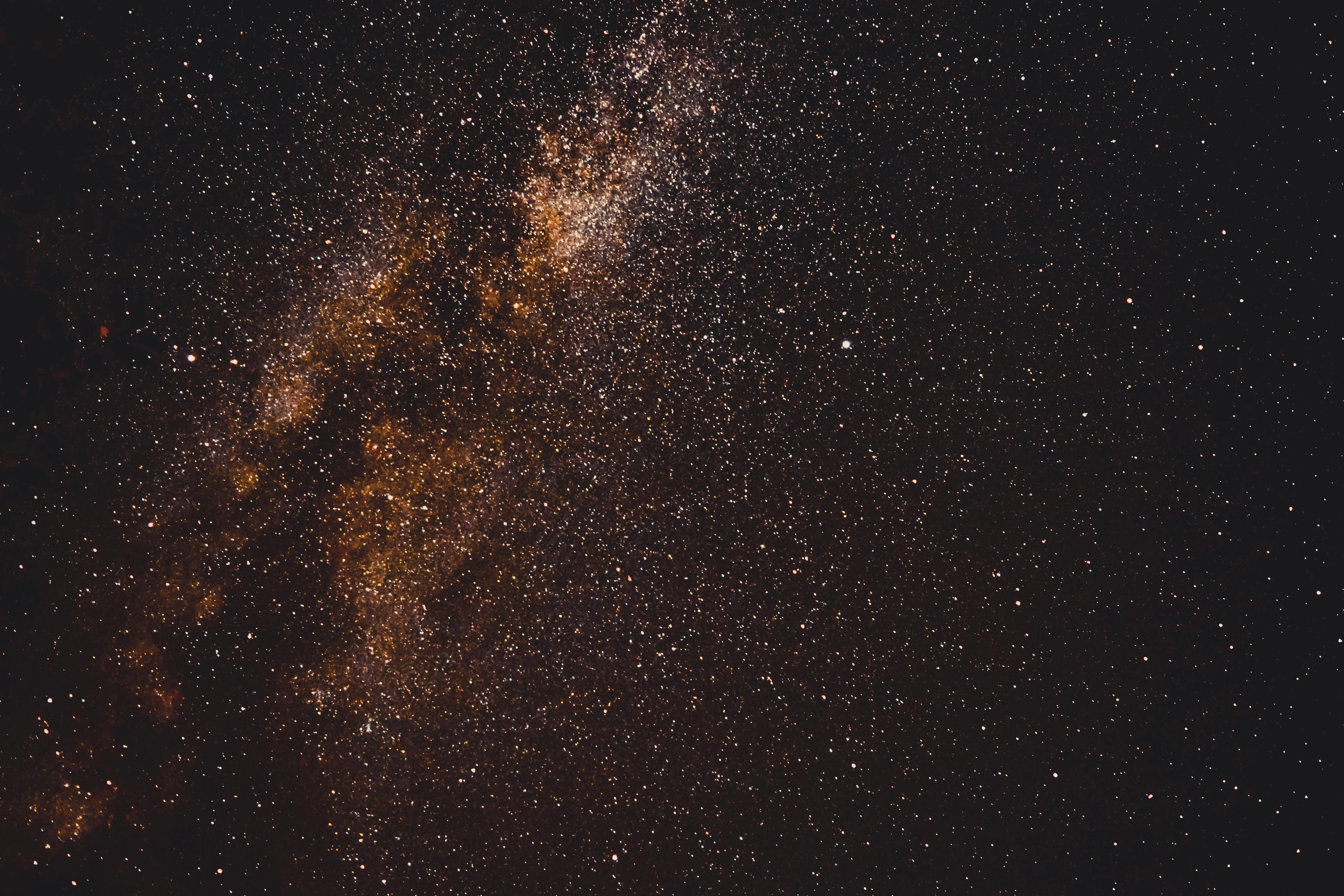
I believe in infinity. That may seem like a strange thing to say but it might be harder to truly believe in infinity than you think. Some physicists have tied themselves into sailor knots trying to use math to prove that infinity is really just another form of finite, whether it’s marking the Big Bang as the beginning of time or the beginning of space or both, or alternative theories like a universe shaped like a Möbius strip or a torus, infinite loops that wrap around on themselves and simulate infinity by their sheer size.
Stephen Hawking contributed by imagining a time when there was no time, but then suddenly time happened. There was no first second, but then there was a second second. How? Math. Really amazing and complicated math, but just math, really. Only math. Nothing observed, except the same motions that gave us the Big Bang Theory. Nothing tested or experimented on, just really, super clever math.
The scientific community sometimes has such a narrow view of infinity that it still assumes everything we can see is everything that exists, that our Big Bang represents everything that possibly could be. Entire new branches of physics have been spawned to explain the lack of stuff we should be able to observe to account for all the massive universe that we know is there because we can measure it, even though we can’t see it. Thus, dark matter and dark energy are born. Even alternative theories to our invisible, er, “dark,” super-friends often attempt to explain the same conundrum from the perspective of a finite volume. When theories do start to account for infinity, they tend to go overboard and imagine infinite parallel, and yet still finite, universes, some of which are almost identical to ours because they branch and fork off from each other all the time for…reasons…most of which seem to be coincidentally centered on the lives and times of nondescript hominids from planet Earth.
It’s Bigger Than We Can Imagine
A single infinite universe can contain an infinite number of Big Bangs, simultaneously. That is a fact; it is self-evident as a truism on its face. An infinite universe can contain an infinite number of Big Bangs. That doesn’t mean it does, but because it can, what that does mean is that our theories should take that fundamental fact into consideration and not waste a lot of time trying to explain a finite universe that doesn’t exist. Because the finite universe can only exist in one scenario, a simulation. If reality and existence as we know it are in fact an incredible, organic (or faux-organic) simulation of some kind, it’s possible that there is an edge, a wall or membrane wrapping our entire universe in a container, like a super massive movie set for The Truman Show, at least from our perspective. A finite universe would need dark matter and energy to simulate the effects of infinity. And it could exist in a volume with a multitude of nearly identical simulations. A simulation is an elegant solution.
Space is an uncontained volume.
Then again, a simulation would have to be housed somewhere. It can’t run itself. It would have to reside on a framework that’s rooted in a reality of some kind. That framework could be physical, like a server farm, or something radically different than anything we can comprehend, but if we are, in fact, in a simulation, then that simulation must exist within some form of reality, and that reality, thus, resides within an infinite universe. Even if we’re at the deepest layer of a massive complex of concentric simulations, each residing within the other like nesting dolls, the whole system itself must exist within a framework of reality somewhere. In other words, even if we’re in the deepest level of The Matrix, the whole matrix is somewhere, and that somewhere, no matter what or where it really is, exists in an infinite universe.
Set All Values to Infinity and Walk Away
The good news is that it makes everything a whole lot easier to contemplate. Because the answer to every question is infinity. How many Big Bangs have happened? Infinity. How many planets like Earth exist? Infinity. How does the universe pull galaxies apart faster than gravity can clump them together? Infinity. How long has time existed? Infinity. How long will the universe last? Infinity. How far away is the farthest Big Bang? Infinity. How many civilizations have come and gone in the universe? Infinity. How many more will come and go? Infinity. How many are still around? Infinity. Then why haven’t we met any of them yet? Infinity. The answer is infinity. The answer is always infinity.
That’s why I believe in infinity. It’s the only answer that makes practical sense. The power and illusion of mathematics is that it can be used to prove that the moon is made of cheese (see: Theory, String). Clever mathematics is not the foundation of the universe, no matter how much some people may wish it to be so. Nature doesn’t care, but even if the nature we observe is clever math because it’s a simulation, that “simulation” is “simulating” nature, or at least something that acts like something natural. The math is just our expression of the natural processes that we can observe when matter and energy interact with each other and themselves. But what we can observe is not necessarily all that is there. That’s why there’s still no equation that explains everything and works in all circumstances or accounts for all variables. Nature doesn’t care about the math. It just acts and reacts, and there are, and will remain, an infinite number of natural actions and reactions that we have never encountered. Because infinity.
Infinite Universe
Infinity is frightening. The idea that we are just one of an infinite number of “intelligent” civilizations in the universe, many of which must be better than ours in an infinite number of ways, many of which are undoubtedly worse, also in an infinite number of ways, is overwhelming. What is my role in an infinite reality? How does any single entity fit in all that? But why does it matter? “All that” is entirely made up of single entities anyway, and “all that” isn’t packed into one small tube, like a Tokyo subway train at rush hour.
If we count by multiples of five (5, 10, 15…) to infinity, even if we run out of words to describe the numbers, we skip over a whole lot of numbers in between, 1-4, 6-9, 11-14, etc. All of those numbers are infinite, the fives and the numbers in between. That’s what infinity does in an infinite universe, stretches everything out along an infinite number of infinite lines in an infinite number of directions. And in every one of those directions are more pieces of the universe, stretching and moving in all directions. It’s an infinite dance that always was and always will be.
Like tube worms between the cold death of the ocean and the hot death of the hydrothermal vent, all living things survive in the margins, in the zones of transition between the rending tension of infinite space and the crushing pressure of planet Earth, or whatever habitable planet you hail from.
We can see it just in our small patch of sky right now. The reason the stars and galaxies appear to be getting pulled away from each other toward distant reaches of space faster and faster with every passing moment is because they are. That’s exactly what an infinite volume would do to an exploding supercluster of gas and matter, like soap bubbles spreading out on the surface of an infinite bathtub, spreading faster as they encounter little or no resistance to the vacuum force that pulls them ever outward. Perhaps, when some clusters inevitably bump into other clusters along the way, they may overcome the universal vacuum and start slowly building into a new singularity for a new Big Bang. The infinite universe has a tendency to rip everything apart; pressure and gravity are the counterbalance. The spinning mass of excited particles in a plasma state generates an EM field that counteracts the radioactive and rending affects of the infinite vacuum. Like tube worms between the cold death of the ocean and the hot death of the hydrothermal vent, all living things survive in the margins, in the zones of transition between the rending tension of infinite space and the crushing pressure of planet Earth, or whatever habitable planet you hail from.
We can’t begin to know how much more universe there really is, but one thing we do know is this. It is not possible for “existence” and “non-existence” to co-exist in the same volume. Space is an uncontained volume. It is filled with particles and all sorts of things, but those are just the “somethings.” Space is the “somewhere.” “Somewhere” is the prerequisite for “something,” and as soon as “somewhere” exists, “everywhere” exists. It is not possible for existence and non-existence to live side-by-side in the same universe. “Somewhere” didn’t wink into existence with our Big Bang, because all the “something” out there has been there all along, no matter how small it was, which is, again, if we assume that our Big Bang is the only Big Bang, a weird assumption in a universe that hasn’t otherwise demonstrated a tendency to do one-offs. The only single iterations of anything in this existence are existence itself and time, and both of those are infinite by definition, and both of them contain an infinite amount of everything else.
Set all values to infinity and walk away. ∞
Additional Reading
What is Infinity? - https://www.mathsisfun.com/numbers/infinity.html
Timeline of the Universe - https://www.sciencealert.com/timeline-shows-the-entire-history-of-the-universe-and-how-it-ends
Alternatives to the Big Bang Theory (includes list of astronomical assumptions) - https://www.space.com/24781-big-bang-theory-alternatives-infographic.html
Physicists Debate Hawking’s Idea That the Universe Had No Beginning - https://www.quantamagazine.org/physicists-debate-hawkings-idea-that-the-universe-had-no-beginning-20190606/
Could the Universe Be a Simulation? The Physics Behind the Hypothesis - https://www.sciencenewstoday.org/could-the-universe-be-a-simulation-the-physics-behind-the-hypothesis
String Theory: A Beginner’s Guide - https://www.newscientist.com/article/dn16950-string-theory-a-beginners-guide/
The Extreme Hydrothermal Vent Worm - https://www.shapeoflife.org/news/featured-creature/2020/06/19/extreme-hydrothermal-vent-worm